This is why the MwStop® Bypass solution?
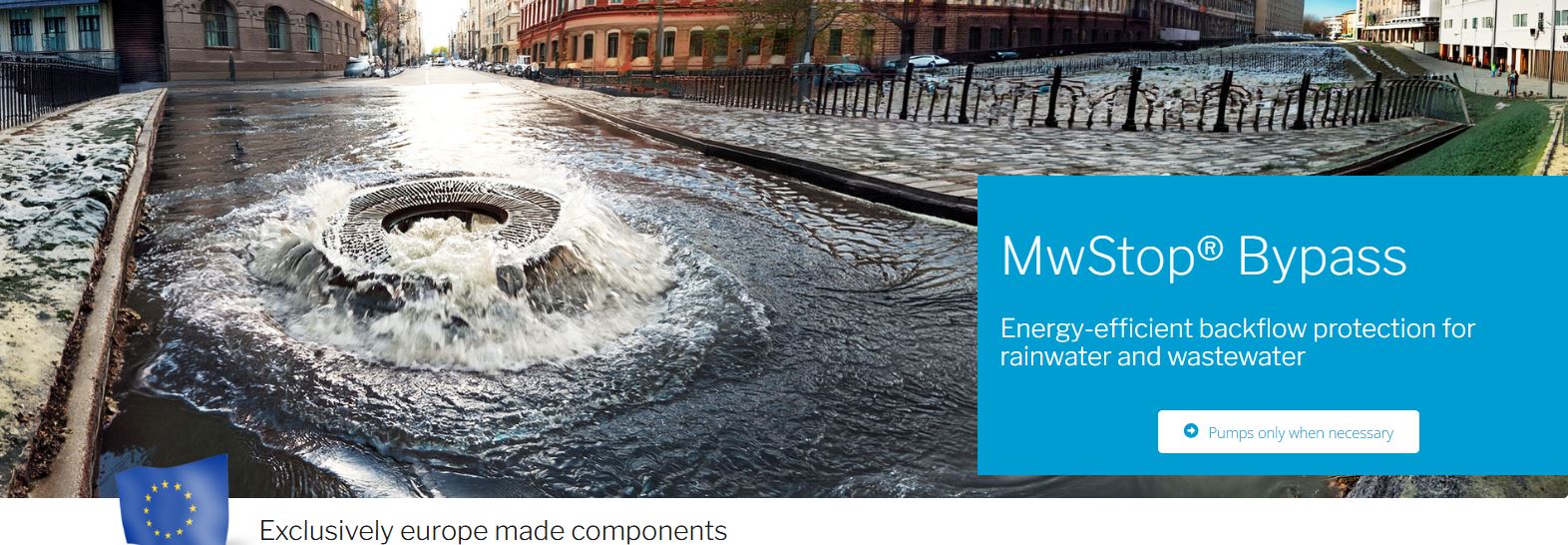
Sewer systems and receiving water bodies can become overloaded during heavy rainfall,
storm surges and high water levels. If the drainage system cannot accommodate the water, water may be forced back towards the building.
Reduced operation without compromising safety
-
Pumps remain on standby during normal operation
-
Automatic closing in the event of backflow
-
Continued discharge during the event
-
Lower energy consumption and reduced wear
This is the MwStop® Bypass
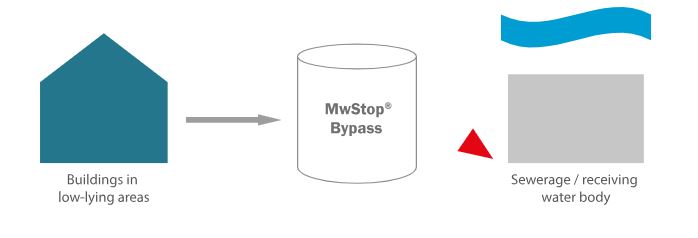
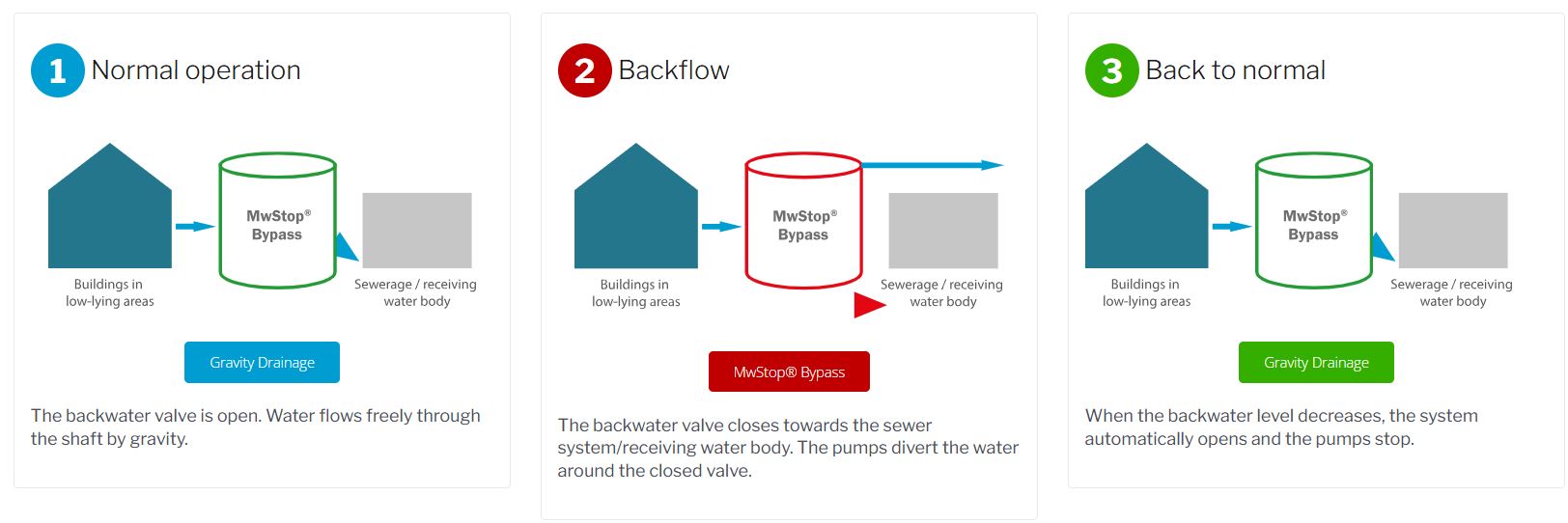
A hybrid bypass shaft combines a backwater valve and a pumping station in one energy-efficient solution. During normal operation, rainwater and wastewater are discharged by gravity. In the event of backflow, the backwater valve closes and the pumps divert the water around the closed valve.
- 1
Gravity drainage first
Uses natural gravity flow during daily operation. - 2
Automatic protection
Closes in the event of backflow from the sewer system or receiving water body.
- 3
Bypass pumps
Only pumps when the shut-off device is closed. - 4
Return to gravity drainage
Automatically opens again as soon as normal conditions are restored.
- 1
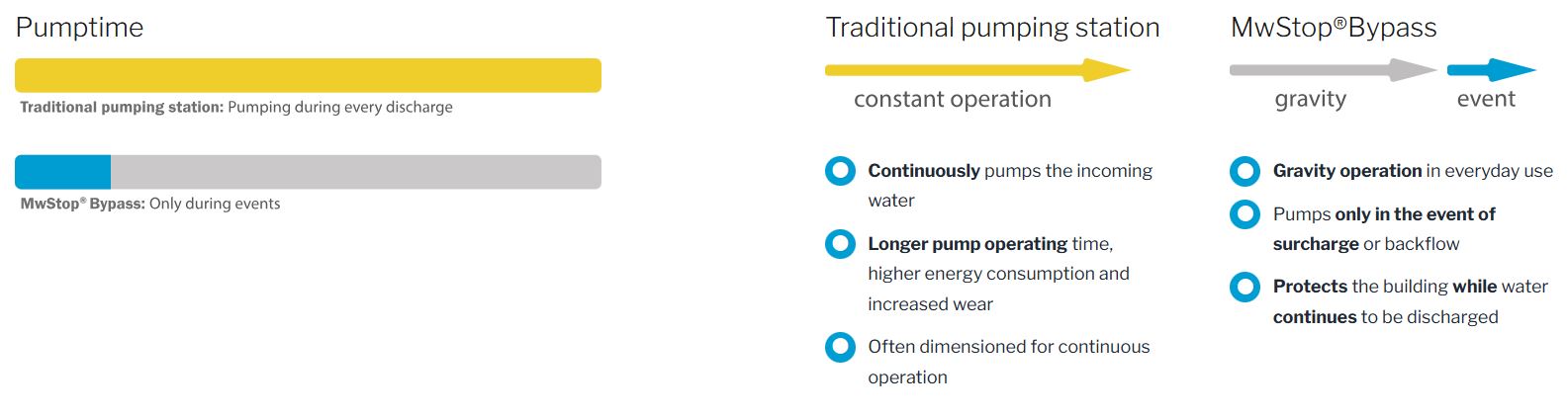
Traditional pumping station vs. MwStop® Bypass
Uses gravity drainage during normal operation and activates the pumps only in backflow situations.
Traditional pumping station vs. MwStop® Bypass
Uses gravity drainage during normal operation and activates the pumps only in backflow situations.
This is how the MwStop® Bypass works
The operating cycle is simple: gravity drainage during normal operation, closing and bypass pumping in the event of backflow, followed by an automatic return to gravity drainage.
Sizing and planning
The right solution depends on flow rate, type of water, backwater level and the building’s risk profile.
- 1
Flow rate and pipe dimensions
Incoming rainwater/wastewater flow, pipe dimensions and required discharge capacity.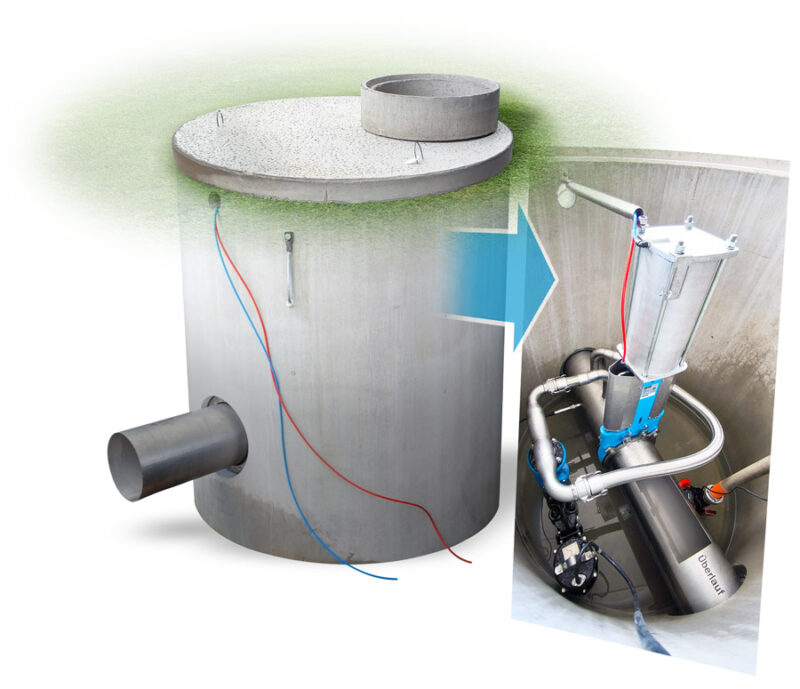
- 2
New or existing shaft?
Available as a prefabricated concrete or PE shaft. Retrofitting in an existing shaft is possible. - 3
Backwater level
The highest backwater level of the drainage system is taken into account. - 4
Pump selection
Pumps are selected for low delivery head/back pressure and the required free passage. - 5
Rainfall intensity
Return periods (T5, T10, T50, T100) - 6
Robustness
Industrial-grade quality. Metal instead of plastic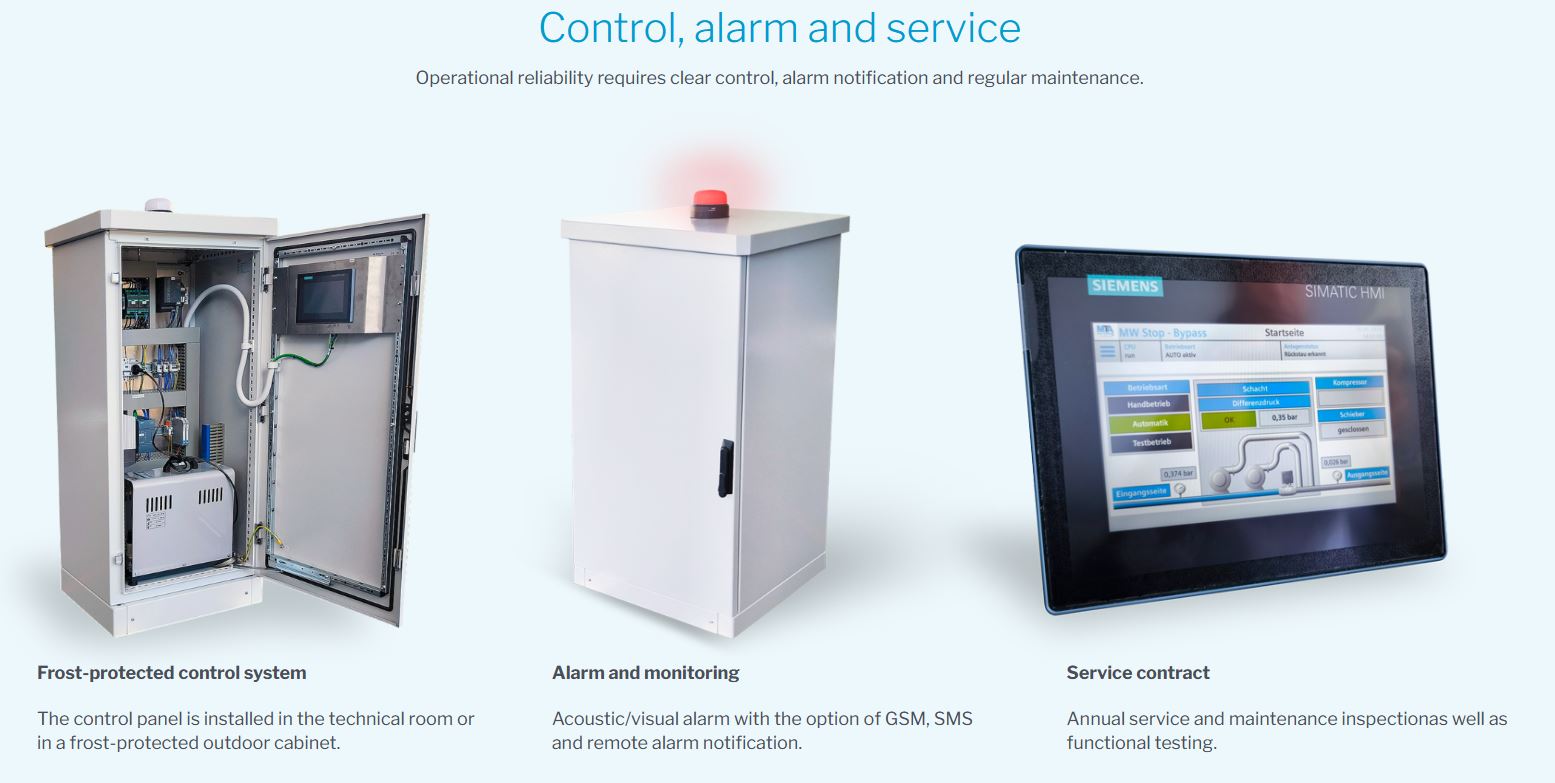
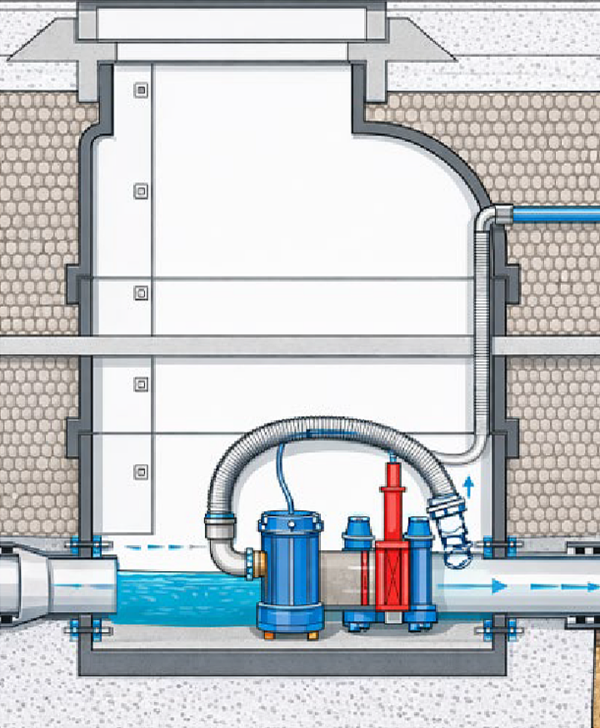
The system is dimensioned according to the specific installation and can be adapted to rainwater, wastewater and combined sewer systems.
- 1
Flow-through shaft
Daily drainage via gravity sewer lines
- 2
Shut-off unit
Automatic closure against backflow from the sewer or receiving water body
- 3
Self-test
Pumps and backflow preventer, automatic self-test
- 4
Pump unit
Typically two pumps for reliable bypass pumping during an event
- 5
Control and alarm
Automatic operation, alarm, and clear operating instructions.
Norms and requirements
EN 12056 & EN 1610 as well as Danish Standard DS 432 and functional requirements
Planned as a combination of a backwater valve and pumping system, with requirements for closing, alarm, access and safe operation.
Bypass system
= Backwater valve + pumping system
The aim is to avoid unnecessary energy consumption caused by continuous pumping when gravity drainage can be used during normal operation.
Alarm
Bypass systems are equipped with an alarm for high water levels and operational faults.
Metal components = no rat damage
Industrial-grade quality and high operational reliability.
Safe elevation level
Adjustable level measurement for the correct height clearance from vulnerable floors/surfaces.
Service access
The shaft and components must be accessible for inspection and maintenance.
Service & maintenance
Small number of users: at least once a year. Large number of users: at least twice a year
Where is MwStop® Bypass used?
The solution is relevant wherever a building must be able to discharge rainwater and wastewater during backflow conditions – without continuous pumping.
Underground car parksTechnical roomsHotelsHousing associationsFacilitiesLow-lying locationsCoastal areas / receiving water bodiesRainwater shaftsCombined sewer systemsRainwater sewer for park areas
Wird für das Projekt dimensioniert – nicht umgekehrt.
MwStop® Bypass in practice
Examples from material provided by Skybrudskompagniet show shaft installation, technical room, commissioning and service.